

Explore Guides
AFRICA
Benin
Triplandio Benin guide covers 7 travel guides with 2 cities across 27 areas, complete with hotel picks. Explore 28 self-guided walking tours in Benin with 50 POI, spanning 96.1 km in total. Get inspired by 8 local dishes, complete with recipes and our unique Food Flavour DNA graph.
Country Data Benin

Key travel data for Benin — safety, healthcare, local currency and essentials, curated by Triplandio.
🌍 Benin
Tourists
337K/y
GDP/cap
$1.7k
Life Exp
61.0 yrs
Population
14.8M
Payments
Mixed
Emergency
112
Travel tipsBenin

Quick tips
- Stay out of the northern border parks — Critical
Several governments, including the UK, advise against all travel to the W and Pendjari national parks and within 5 km of the Burkina Faso border, because of terrorist attacks and kidnapping. Travel insurance may not cover you there.
- No photos of government sites — Critical
Taking photographs at or near military installations, government buildings or the airport is illegal in Benin. Ask before photographing anything official, and put the camera away at checkpoints.
- Deadly currents along the coast — Critical
Ocean currents are very strong along the whole of Benin's coast and many people drown each year. Don't swim unless reliable local people tell you a spot is safe.
- Bring a yellow fever certificate — Good to know
Every visitor to Benin must show proof of yellow fever vaccination on arrival. Get the jab at least 10 days before you travel and carry the certificate with your passport.
- Apply for your visa online — Good to know
You need a visa to enter or pass through Benin. Apply for the e-visa online at least 7 days before arrival, and your visa is issued when you land at Cotonou airport.
- Base your trip in the south — Local tip
Benin's main sights — Cotonou, Ouidah, the stilt village of Ganvié, Porto-Novo and Abomey — are all in the south, within a few hours' drive of each other, and away from the risky northern border areas.
- Do
- Carry your yellow fever certificate
- Greet people before asking anything
- Ask before photographing shrines
- Take antimalarials
- Travel between towns in daylight
- Don’t
- Go near the northern border parks
- Photograph soldiers or the airport
- Swim in the sea without local advice
- Walk on the beach alone
- Pay officials for “favours”
Critical
Prison or heavy penalty possible
Getting between cities
- Eastern border area — Critical
Several governments, including the UK, advise against all but essential travel between the Tchaourou–Malanville highway and the Nigerian border, and to the rest of Alibori and Atacora, because of crime and terrorism.
Laws & fines
- Drug offences mean prison — Critical
Possessing, using or trafficking illegal drugs in Benin can lead to a long prison sentence and heavy fines.
- Avoid protests and follow curfews — Critical
Benin saw an attempted coup in December, and protests can start without warning. Avoid rallies and crowds, and obey any curfew the authorities announce at short notice.
Health
- Malaria is a serious risk — Critical
Malaria is present throughout Benin. Take antimalarial tablets, sleep under a net, use repellent and see a doctor quickly if you get a fever, even weeks after returning home.
Beaches & adventure
- Don't walk on the beach alone — Critical
Muggings happen on Benin's beaches, including in Cotonou. Never walk on the beach alone, at any time of day, and leave valuables at your hotel.
- Don't drive at night — Critical
Roads in Benin are poorly lit and in bad condition, and carjackings happen. Travel between towns in daylight, keep doors locked, and don't stop if people signal you to pull over.
Caution
Fines, losses or injury possible
Getting between cities
- Driving yourself in Benin — Caution
Traffic drives on the right. You need an International Driving Permit (IDP) plus your licence, and should expect potholes, animals, police roadblocks and no lighting at night.
Laws & fines
- Politely refuse requests for “gifts” — Caution
Officials sometimes ask for a “gift” to speed up paperwork. Decline politely and firmly, as paying a bribe could involve you in a crime.
Tipping & money
- Scams by phone and online — Caution
Scammers in Benin target foreigners with romance, business and job offers. If friends or family are asked to send you money, they should check with you first.
Beaches & adventure
- Moto-taxis are risky — Caution
Motorbike taxis called zémidjans (or “zems”) are everywhere in Benin and cheap, but accidents are common. If you use one, ask for a helmet and agree the fare first.
Good to know
Rules and useful facts
Getting between cities
- Hire a car with a driver — Good to know
Benin has no reliable public transport, and shared taxis and long-distance buses are often poorly maintained and overloaded. A hired car with a local driver is the safest way to travel between towns.
- Fuel in the north — Good to know
Fuel shortages are common in rural northern Benin. Fill up whenever you can and carry spare fuel on long trips.
Regions & seasons
- The south: humid with two rainy seasons — Good to know
Cotonou, Ouidah and Porto-Novo are hot and humid all year, with main rains from April to July and a shorter wet spell around September to November.
- The north: largely off-limits — Good to know
Northern Benin has national parks and Tata Somba fortified houses, but much of it falls under government travel warnings, including the UK's. Check the latest advice before planning anything north of the centre.
Laws & fines
- Discretion for same-sex couples — Good to know
Same-sex relationships are legal in Benin but not widely accepted. Public displays of affection can attract hostile attention.
Tipping & money
- Cash is king — Good to know
Benin uses the West African franc (CFA). Cards work mainly in big hotels in Cotonou, so carry cash, including small notes, especially outside the city.
Entry & visa
- Travel advisory: Level 2 of 4 — Good to know
Exercise increased caution — the U.S. State Department's rating for Benin.
- Passport valid for your stay — Good to know
Your passport must be valid for the whole of your stay in Benin. Check with your airline, as many ask for more validity than that.
- Get neighbouring visas before you go — Good to know
You cannot get visas for Nigeria, Ghana or Togo in Benin. If you plan to continue overland, arrange them before you leave home.
- Declare restricted goods — Good to know
Benin has strict customs rules. Declare anything that may be prohibited or subject to duty when you arrive.
Health
- Don't drink the tap water — Good to know
Drink bottled or treated water in Benin and avoid ice, raw salads and unpeeled fruit from street stalls.
- Healthcare is very limited — Good to know
Hospitals in Benin are poor, especially outside Cotonou, and serious cases need medical evacuation. Get insurance that covers evacuation, and carry funds for treatment.
- Ambulance: call 118 — Good to know
For an ambulance in Benin call 118. Outside Cotonou there may be no emergency response, so you may need to arrange transport to a clinic yourself.
- Dengue from day-biting mosquitoes — Good to know
Mosquitoes in Benin also spread dengue, and they bite in the daytime. Use repellent all day, not only in the evening.
Beaches & adventure
- Piracy at sea — Good to know
Piracy and armed robbery at sea affect the Gulf of Guinea, including ports in the region. Take advice before any boat trip beyond the coast.
Local tips
Local know-how
Regions & seasons
- Best time: November to March — Local tip
The dry months from November to March are the easiest time to travel in southern Benin, though the Harmattan haze can dull the skies.
Customs
- Respect Voodoo shrines and ceremonies — Local tip
Voodoo (Vodun) is a living religion in Benin, not a show. Ask before photographing shrines, priests or ceremonies, and expect that a small fee or offering may be asked.
- Greet people before anything else — Local tip
In Benin it is rude to launch straight into a question. Say “bonjour” and ask how the person is before asking directions or a price.
- Use your right hand — Local tip
Give, receive and eat with your right hand in Benin; the left hand is considered unclean.
- Dress modestly away from the beach — Local tip
Beninese people dress neatly and fairly modestly. Keep swimwear for the beach and cover up in towns, villages and religious sites.
Tipping & money
- Bargain at markets — Local tip
Prices at Beninese markets and craft stalls are open to haggling. Start well below the first price and keep it good-humoured.
- Tip guides and drivers — Local tip
Tipping isn't expected in local restaurants in Benin, but guides, drivers and hotel staff appreciate a small tip for good service.
Our Benin city guides
The UNESCO royal palaces need a guide; drive up from Cotonou in daylight, about three hours.
The official capital is an easy day trip from Cotonou; go by hired car and avoid driving back after dark.
Say it locally
French is the official language; use “vous” with strangers and elders, and add “monsieur” or “madame” to be extra polite.
Through the year
Festival or season Public holiday (exact date)
- Short rainy season (south)
Sep–Nov 2026 · A second, lighter rainy season in southern Benin; roads outside towns can still flood.
- All Saints' Day
Mon 1 Nov 2027 · Public holiday
- Harmattan
Dec 2026–Feb 2027 · A dry, dusty wind from the Sahara brings hazy skies and cooler nights; hard on contact lenses and chests.
- Christmas Day
Fri 25 Dec 2026 · Public holiday
- Voodoo Festival
Jan 2027 · Benin's national Voodoo day in early January (biggest in Ouidah) draws huge crowds; book rooms and transport early and watch for pickpockets.
- New Year
Fri 1 Jan 2027 · Public holiday
- Vodoun Festival
Fri 8 Jan 2027 · Public holiday
- Korité (tentative)
Wed 10 Mar 2027 · Public holiday
- Easter Monday
Mon 29 Mar 2027 · Public holiday
- Long rainy season (south)
Apr–Jul 2027 · Heavy rain along the coast can flood roads, especially in rural areas; allow extra travel time.
- Labour Day
Sat 1 May 2027 · Public holiday
- Ascension Day
Thu 6 May 2027 · Public holiday
- Whit Monday
Mon 17 May 2027 · Public holiday
- Tabaski (tentative)
Mon 17 May 2027 · Public holiday
- Independence Day
Sun 1 Aug 2027 · Public holiday
- Assumption of Mary
Sun 15 Aug 2027 · Public holiday
- Maouloud (tentative)
Sun 15 Aug 2027 · Public holiday
Sources: GOV.UK travel advice · U.S. State Dept · Google public holidays
Traditional Local Food Benin
🌿
Main course
Vegetarian
Yawoyo
yah-woh-yoh
· Potato green sauce
Yawoyo is a unique dish made of potatoes in a vibrant green sauce.
Open Yawoyo recipe🐟
Main course
Fish & Seafood
Ago Glain
Ago Gbain
a-go glayn
· Wild greens and fish stew
Stew of wild greens with fish.
Open Ago Glain recipe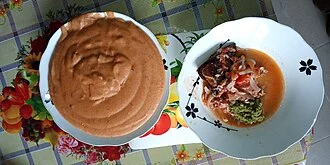
Main course
Vegetarian
Amiwô
ah-mee-woh
· Spiced cornmeal porridge
A spicy paste made from cornmeal.
Open Amiwô recipe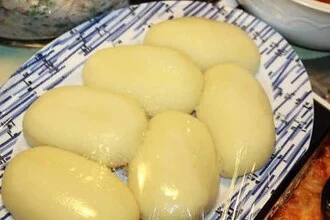
Snack
Vegetarian
Fuflui
foo-floo-ee
· Sweet potato fritters
Fried balls of sweet potato.
Open Fuflui recipe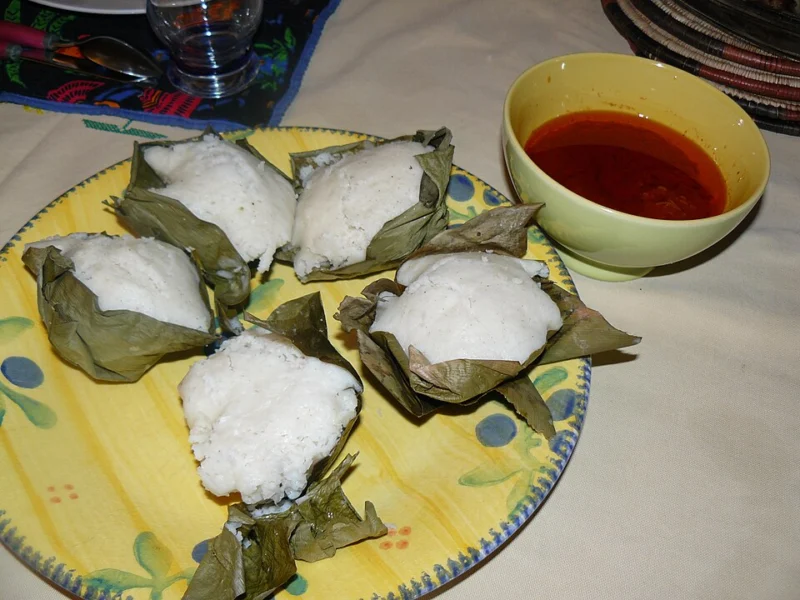
Bread
Vegan
Ablo
ah-bloh
· Steamed rice bread
Steamed cakes made from fermented batter.
Open Ablo recipe🌿
Main course
Vegetarian
Kpatankou
kpa-tan-koo
· Corn and cowpea pie
Kpatankou is a savory pie made of corn and cowpeas.
Open Kpatankou recipe🌱
Main course
Vegan
Pâté Rouge
pah-tay roozh
· Tomato maize paste
Pâté Rouge is a vibrant dish made from maize and tomatoes.
Open Pâté Rouge recipe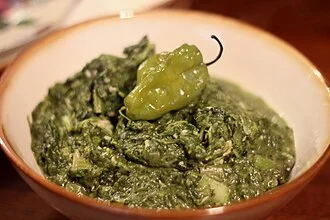
Main course
Vegan
Calalou
Kalalou
ka-lah-loo
· Spinach and okra stew
A flavorful spinach and okra stew.
Open Calalou recipe