


Finlayson
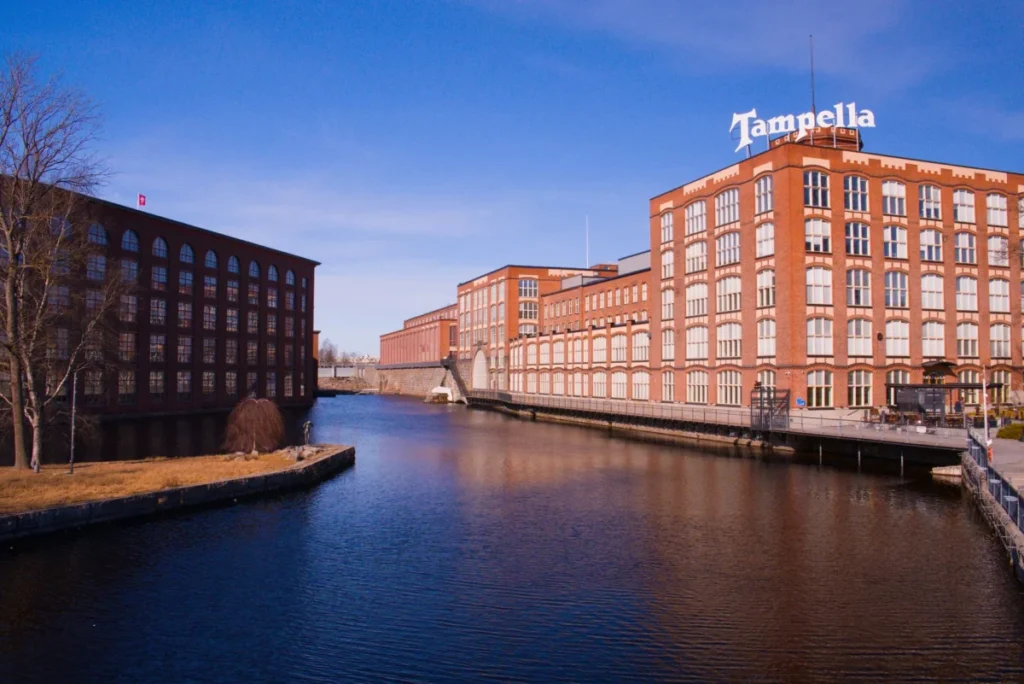
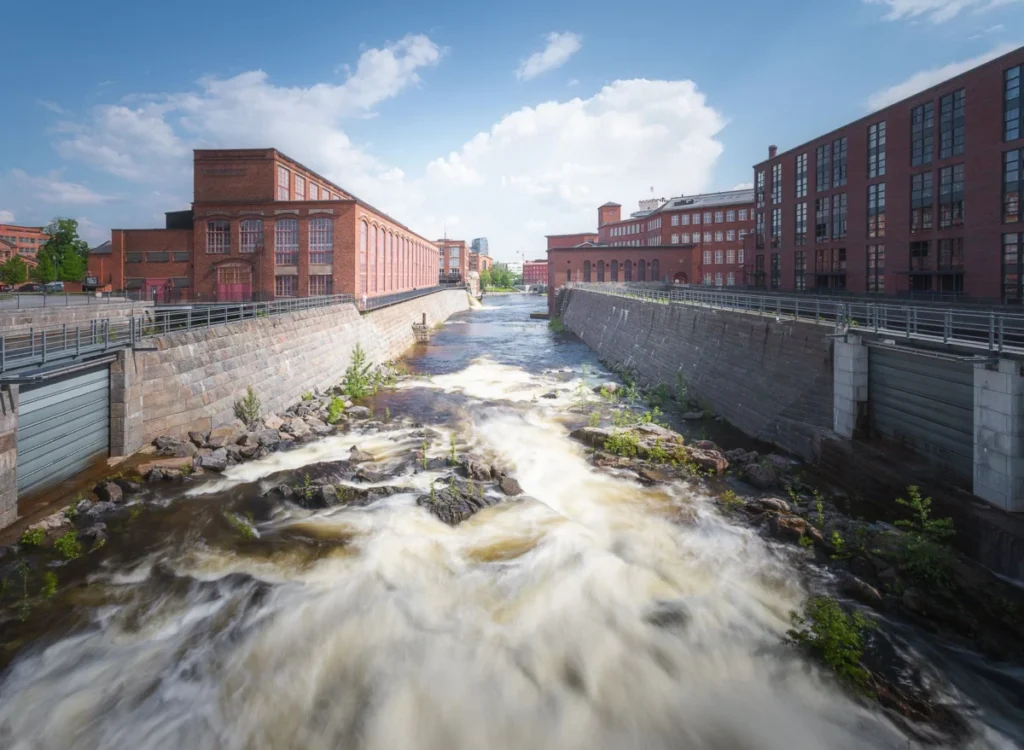
The red-brick Finlayson factory complex gives this part of Tampere a clear sense of place. Start at the old factory gates on Finlaysoninkatu, then follow the courtyards around Väinö Linnan aukio, where cafés and restaurants occupy restored industrial buildings. The Finnish Labour Museum Werstas explains the working history of the complex, while Vapriikki, in the former Tampella factory buildings beside the Tammerkoski rapids, combines several museums under one roof. The Spy Museum and the Finlayson Art Area add smaller, easy-to-fit stops for a first visit.
Hotels here keep you close to central sights without placing you directly on the busiest shopping stretch. Walk south along the riverside to Tammerkoski, or use Satakunnankatu and Hämeenkatu for buses and tram connections. Tallipiha, the former stable yard on the Finlayson grounds, is useful for a short coffee stop and small shops, while the Finlayson factory courtyards are especially convenient for evening dining. Choose this area when you want historic architecture, museums and restaurants outside your door, with the railway station and central squares still reachable on foot.
| James Finlayson founded the factory in 1820 Scottish engineer James Finlayson opened a machine works beside the Tammerkoski rapids. |
| The Nottbecks took over Finlayson in 1836 Carl Samuel Nottbeck and Georg Adolf Rauch bought the factory and expanded its textile production. |
| Plevna introduced electric light in 1882 Finlayson's Plevna hall became one of the Nordic countries' first industrial sites with electric lighting. |
| Plevna's weaving hall is now a beer restaurant The former Plevna factory hall houses Panimoravintola Plevna, a brewery-restaurant in the Finlayson area. |