Explore Guides
ASIA / MYANMAR
Triplandio Yangon guide covers 3 travel guides across 12 areas, complete with hotel picks. Explore 11 self-guided walking tours in Yangon with 16 POI, spanning 44.3 km in total. Get inspired by 5 local dishes, complete with recipes and our unique Food Flavour DNA graph.
Yangon
City & Country Data Yangon (Myanmar)

Key travel data for Yangon — local prices, safety, healthcare, local currency and essentials, curated by Triplandio.
🌍 Myanmar
Safety
0
Health
0
Lifestyle
21
Infra
0
Rank
#95
Score
8
Tourists
903K/y
GDP/cap
$1.5k
Life Exp
67.1 yrs
Population
54.9M
Currency
MMK K
Language
Burmese
Payments
Cash only
Emergency
199
💰 Prices in Yangon
Coffee
$2.00
Beer
$1.00
Lunch
$2.56
Groceries
$222.00/w
Taxi/km
$1.00
Transit
$0.24
Fuel
$9.12/l
Internet
$18.72/m
Salary
$279/m
Travel tipsYangon (Myanmar)

Quick tips
- Plan around the overnight curfew — Critical
Yangon is under an overnight curfew, and emergency help is hard to reach at night. Be back at your hotel well before it starts, and time airport transfers around it.
- An online review can get you prosecuted — Critical
Myanmar's broad defamation laws let people bring criminal charges over what you say, and foreigners have been investigated for posting a critical hotel review online. Think before you post.
- Buddha tattoos can count as insulting religion — Critical
Insulting religion is a criminal offence in Myanmar and covers disrespectful images of the Buddha, including tattoos. Cover any religious tattoo and treat Buddha images with respect.
- Much of the country is a conflict zone — Critical
Since the military seized power in February 2021, fighting and airstrikes continue across much of Myanmar. Governments advise against all travel to large regions, and the situation can change overnight.
- Bring clean, new US dollars — Good to know
Myanmar runs largely on cash and many cash machines reject foreign cards. Bring crisp US dollar notes with no marks, folds or tears; notes with serial numbers starting AB or CB may be refused.
- Get your e-visa before you fly — Good to know
Everyone needs a visa to enter Myanmar, and there is no visa on arrival. Apply for a tourist e-visa online before you travel; your passport must be valid for 6 months after arrival.
- Do
- Get an e-visa before you fly
- Bring crisp, unmarked US dollars
- Carry your passport at all times
- Remove shoes and socks at pagodas
- Obey curfews and checkpoints
- Don’t
- Photograph soldiers or protests
- Post critical reviews or comments
- Fly a drone anywhere
- Show Buddha tattoos
- Leave main roads in rural areas
Critical
Prison or heavy penalty possible
Scams & safety
- Travel advisory: Level 4 of 4 — Critical
Do Not Travel — the U.S. State Department's rating for Myanmar.
- Keep away from military targets — Critical
Opposition groups have set off small bombs in Yangon at government buildings, police stations and businesses linked to the military. Don't linger near them, especially after sunset.
Laws & fines
- Drug laws include the death penalty — Critical
Drug trafficking in Myanmar carries at least 15 years in prison or the death penalty. Possession of any amount can mean 5 to 10 years in prison and a fine.
- Obey curfews and checkpoints — Critical
Parts of Myanmar are under martial law, curfews or stay-at-home orders. Ignoring them can mean detention and a long prison sentence; always carry your passport with its visa for checkpoints.
- Don't photograph soldiers or protests — Critical
Taking photos or video of police, soldiers, military sites or demonstrations in Myanmar can get you arrested and detained. Keep your camera away from security forces.
- Drones can mean prison — Critical
Flying a drone in Myanmar near government buildings, religious buildings or even tourist sites can lead to criminal charges and prison. Leave your drone at home.
- Arrest and detention risks — Critical
Myanmar has a real risk of arbitrary arrest, pre-trial detention can last months, and prison conditions are extremely poor. Journalists and activists are especially at risk.
- Same-sex activity is illegal — Critical
Same-sex sexual activity is illegal in Myanmar for men and women and can carry up to life imprisonment. The law is not consistently enforced, but police have used it to extort bribes, and public affection of any kind is frowned upon.
Entry & visa
- Declare cash, gold and gems — Critical
Declare foreign currency worth over 10,000 US dollars and any valuable gold, gems or jewellery on arrival, or risk prison. Bringing in gold for trading is banned.
Health
- Healthcare is very limited — Critical
Myanmar's public health system is under severe strain. Outside Yangon and Mandalay, good care is scarce; serious cases need evacuation, usually to Thailand, so insurance is essential.
Outdoors & adventure
- Famous sights are in risk zones — Critical
Bagan (in Mandalay Region) and Inle Lake (in southern Shan State) are in areas where governments advise against all but essential travel, and Ngapali Beach in Rakhine State is in a no-travel zone.
- Beware of landmines — Critical
Landmines are a serious risk in rural Myanmar, especially in Rakhine, northern Shan and Kachin states, and their use has spread since 2021. Stay on main roads and paths.
- Rules can change overnight — Critical
The military can impose new travel restrictions in Myanmar at any time, closing roads or regions without warning. Check the latest situation daily with trusted local contacts.
Caution
Fines, losses or injury possible
Scams & safety
- Gem sellers at the markets — Caution
Around Bogyoke Market and the pagodas, sellers offer “bargain” rubies, jade and sapphires. Fakes are common and unlicensed gem deals can be illegal; buy only from licensed shops, if at all.
- Bag snatching and distraction theft — Caution
Thieves in Yangon distract people by asking questions, begging or jostling. Keep your cash out of sight and carry only what you need for the day.
Tipping & money
- Change money at banks — Caution
Change US dollars into kyat at banks or licensed exchange counters, which prefer large notes. Avoid street money changers, who may short-change you.
Entry & visa
- Overstaying means fines or detention — Caution
Overstaying your Myanmar visa leads to a fine, paid in US dollars when you leave, and you could be detained.
Outdoors & adventure
- Check for life jackets on boats — Caution
River boats and ferries in Myanmar often fall short of international safety standards, and rescue services are limited. Make sure life jackets are on board and check the weather before any river trip.
Good to know
Rules and useful facts
Getting around
- No motorbikes in central Yangon — Good to know
Motorbikes have long been banned in central Yangon, so don't plan on renting a scooter to get around the city.
Laws & fines
- Many apps are blocked — Good to know
Myanmar's authorities block Facebook, WhatsApp and other services, and sometimes cut the internet entirely. Download offline maps and agree backup ways to stay in touch.
Tipping & money
- Cash is king — Good to know
Myanmar is largely cash-based and banking is heavily disrupted. Many cash machines don't accept foreign cards and have low daily limits; Visa is accepted more often than Mastercard.
Entry & visa
- Yellow fever certificate — Good to know
You need a yellow fever vaccination certificate to enter Myanmar if you arrive from a country with a risk of yellow fever transmission.
- Local SIM and phone registration — Good to know
Foreign SIM cards don't work reliably in Myanmar. Buy a cheap local SIM on arrival; after a 30-day grace period, phones must be registered or they are blocked from local networks.
Health
- Ambulance number is 192 — Good to know
In Myanmar, dial 192 for an ambulance. Where overnight curfews apply, such as in Yangon, reaching emergency care at night can be very difficult.
- Mosquito-borne diseases — Good to know
Mosquitoes in Myanmar spread dengue, malaria, chikungunya and Zika. Use strong repellent day and night and ask a travel clinic about malaria tablets.
- Food and water hygiene — Good to know
Hepatitis A, typhoid and cholera spread through dirty food and water in Myanmar. Drink only bottled or boiled water and eat freshly cooked food.
- Don't swim in rivers — Good to know
River water in Myanmar can carry schistosomiasis, a parasitic infection that enters through the skin. Avoid swimming or wading in rivers and lakes.
- Bring all your medicines — Good to know
Foreign prescriptions are not accepted in Myanmar pharmacies, and medicines on sale may be fake. Bring enough of your own medication for the whole trip.
Outdoors & adventure
- Monsoon floods and landslides — Good to know
The rainy season in Myanmar, May to October, brings flooding and landslides that make roads impassable and damage bridges. Build spare days into any journey and check local weather before travelling.
- Cyclones hit the coast twice a year — Good to know
Cyclones usually strike Myanmar between mid-April and mid-May and again in October and November, bringing floods and landslides. Check weather reports before travelling, especially to coastal areas.
- Earthquake damage around Mandalay — Good to know
A magnitude 7.7 earthquake in March 2025 badly damaged roads, bridges and hospitals in Mandalay, Sagaing and Naypyitaw. Expect disrupted infrastructure there and follow local authorities' advice.
Local tips
Local know-how
Getting around
- Yangon airport (RGN) to downtown — Local tip
Yangon International Airport is north of the city; the drive downtown can take about 45–60 minutes in traffic. Use the official taxi counter or a hotel pick-up.
- Taxis are the main way around — Local tip
There is no metro in Yangon and buses are hard for visitors to use. Take taxis, agree the fare before getting in, or ask your hotel to book a trusted driver.
- Visiting the Shwedagon Pagoda — Local tip
The Shwedagon Pagoda has several entrances with lifts or stairs; foreigners pay an entry fee. You'll leave shoes and socks at the entrance, so go early before the platform tiles heat up.
Customs
- Shoes and socks off at pagodas — Local tip
At every pagoda and monastery in Myanmar you must remove both shoes and socks, often from the outer gate. Wear sandals that are easy to slip off.
- Cover shoulders and knees — Local tip
Shorts, short skirts and sleeveless tops can cause offence at Myanmar's religious sites. Wear trousers or a long skirt; a longyi, the local wrap-around sarong, is cheap to buy.
- Show respect to monks — Local tip
Women should not touch a Buddhist monk or hand him anything directly. Never point your feet at monks or Buddha images, and don't sit higher than a monk.
- Avoid talking politics in public — Local tip
Political conversations can put local people at risk as well as you. Let people raise politics themselves, and never press them to talk about the military or the opposition.
Tipping & money
- Phone ahead before paying by card — Local tip
If you want to pay a hotel or restaurant in Myanmar by card, phone ahead to check it's possible. Keep US dollars for any overstay fine or excess baggage at departure.
- Tips and haggling — Local tip
Tipping isn't traditional in Myanmar, but small tips for guides, drivers and hotel staff are appreciated. Polite bargaining is normal at markets, not in shops with marked prices.
Say it locally
Add “ba” or “ba-deh” to soften requests; a smile and a slight bow go a long way.
Through the year
Festival or season Public holiday (exact date)
- Cool dry season
Nov 2026–Feb 2027 · The most comfortable weather, with warm days and cool nights; the traditional travel season.
- Sensitive anniversaries
Nov 2026, Jan–Mar 2027, Jul–Aug 2027 · Attack risk and security rise around dates such as 4 January, 1 and 12 February, 2 and 27 March, 19 July, 8 August and 25 November.
- Full Moon Day of Tazaungmone
23–24 Nov 2026 · Public holiday
- National Day
Fri 4 Dec 2026 · Public holiday
- Christmas Day
Fri 25 Dec 2026 · Public holiday
- New Year
Fri 1 Jan 2027 · Public holiday
- Independence Day
Mon 4 Jan 2027 · Public holiday
- Kayin New Year Day
Fri 8 Jan 2027 · Public holiday
- Chinese New Year
Sun 7 Feb 2027 · Public holiday
- Union Day
Fri 12 Feb 2027 · Public holiday
- Hot season
Mar–May 2027 · Temperatures build to their peak in April and May, especially in central Myanmar.
- Peasants' Day
1–2 Mar 2027 · Public holiday
- Full Moon Day of Tabaung
Mon 22 Mar 2027 · Public holiday
- Armed Forces' Day
Sat 27 Mar 2027 · Public holiday
- Thingyan water festival
Apr 2027 · Myanmar New Year in mid-April, with days of water-throwing; many businesses close and security is stepped up.
- Maha Thingyan (Water Festival)
10–18 Apr 2027 · Public holiday
- Monsoon
May–Oct 2027 · Heavy rain, floods and landslides, especially on the coast; some roads become impassable.
- Labor Day
Sat 1 May 2027 · Public holiday
- Eid al-Adha (tentative)
Mon 17 May 2027 · Public holiday
- Full Moon Day of Kasong
Thu 20 May 2027 · Public holiday
- Kasong
Fri 21 May 2027 · Public holiday
- Full Moon Day of Waso (Beginning of Buddhist Lent)
Sun 18 Jul 2027 · Public holiday
- Martyrs' Day
Mon 19 Jul 2027 · Public holiday
- Thadingyut festival of lights
Oct 2027 · Candles and lanterns mark the end of Buddhist Lent at the October full moon.
- Full Moon Day of Thadingyut (End of Buddhist Lent)
Thu 14 Oct 2027 · Public holiday
- Full Moon Day of Thadingyut Holiday (End of Buddhist Lent)
15–16 Oct 2027 · Public holiday
Sources: GOV.UK travel advice · U.S. State Dept · Google public holidays
Best time to visit Yangon (Myanmar)
Now (November) avg high: 31°C, wetter month, full season — expect crowds. Best months to walk: Feb & Dec.
Live Temp
…
~Day / Night Temp
31°C / 24°C
Sunrise / Sunset
6:06 / 17:32
Local time
1:58
Best Months  Feb & Dec
J
Jan
F
Feb
M
Mar
A
Apr
M
May
J
Jun
J
Jul
A
Aug
S
Sep
O
Oct
N
Nov
 D
Dec
M
Mar
A
Apr
M
May
J
Jun
J
Jul
A
Aug
S
Sep
O
Oct
N
Nov
D
Dec
Check Yangon hotels
Temperature
Average daytime high, month by month. Zero line marks freezing point.
Crowds
How busy it gets — traveller interest by month.
Rainfall
Rainy days to expect each month.
Sunshine
Hours of sun per day, by month.
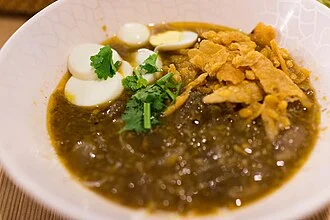
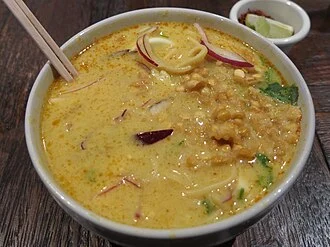
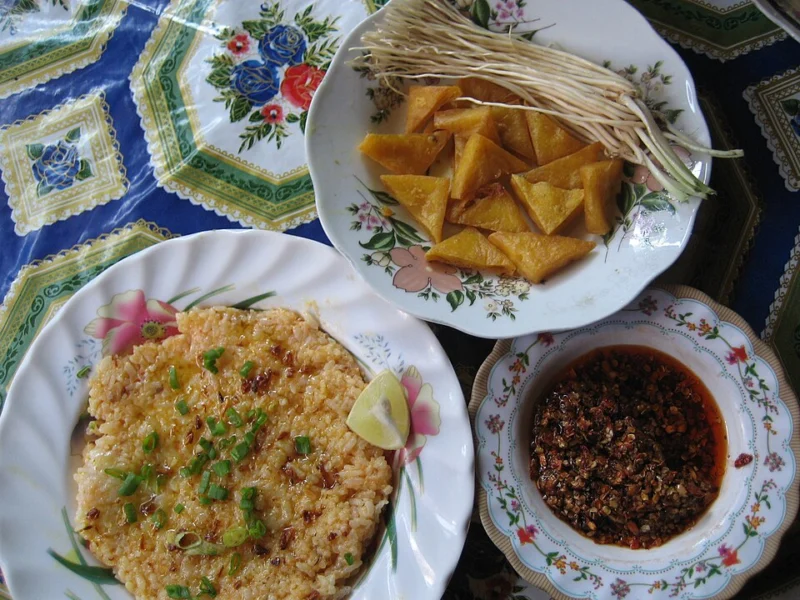
A tangy rice salad mixing herbs and spices. A rice noodle soup fragrant with fish and aromatics. Wheat noodles in a rich coconut curry with chicken. A tangy and spicy chickpea tofu salad. Charcoal-grilled skewered pork with spicy dip.
Traditional Local Food
Yangon (Myanmar)
 Starter
Vegan
Htamin Jin
ထမင်းချဉ်
hta-min jin
· Rice salad with spices
Main course
Fish & Seafood
Mohinga
မုန့်ဟင်းခါး
mo-hin-gah
· Fish noodle soup
Main course
Meat
Ohn No Khao Swè
အုန်းနို့ခေါက်ဆွဲ
oan no khow sway
· Coconut chicken noodles
🌱
Snack
Vegan
Shan Tofu Salad
ရှမ်းတိုဟူးသုပ်
shan toh-hoo thoke
· Chickpea tofu salad
🥩
Street food
Meat
Wet Thar Dote Htoe
ဝက်သားဒိုးထိုး
wet thar doe toe
· Grilled pork skewers