Explore Guides
AFRICA / CAMEROON
Triplandio Douala guide covers 3 travel guides across 10 areas, complete with hotel picks. Explore 11 self-guided walking tours in Douala with 17 POI, spanning 31 km in total. Get inspired by 5 local dishes, complete with recipes and our unique Food Flavour DNA graph.
Douala
City & Country Data Douala (Cameroon)

Key travel data for Douala — local prices, safety, healthcare, local currency and essentials, curated by Triplandio.
🌍 Cameroon
Tourists
1.0M/y
GDP/cap
$2.0k
Life Exp
64.0 yrs
Population
29.9M
Payments
Mixed
Emergency
112
💰 Prices in Douala
Coffee
$2.50
Beer
$1.50
Lunch
$5.00
Groceries
$25.00/w
Taxi/km
$1.00
Transit
$0.50
Fuel
$1.20/l
Internet
$50.00/m
Salary
$300/m
Travel tipsDouala (Cameroon)

Quick tips
- Large regions are off-limits — Critical
Several governments, including the UK, advise against all travel to the North-West and South-West regions (except Limbé), most of the Far-North, the Bakassi Peninsula and border areas. Insurance may not cover you there.
- Camouflage clothing is illegal — Caution
Only the armed forces may wear camouflage in Cameroon. Wearing camouflage trousers, jackets or bags can get you fined and detained, so leave anything with a camo pattern at home.
- Carry ID with your visa at all times — Caution
Police in Cameroon can detain you if you have no identification. Carry your passport or a certified copy of it showing your valid visa.
- No photos of official buildings — Caution
Photographing military sites, government buildings, airports and ports is illegal in Cameroon. Officials may also demand money for a “permit” to photograph elsewhere — ask before shooting.
- Apply for the e-visa early — Good to know
You must have a visa for Cameroon and cannot get one on arrival at Yaoundé or Douala airports. Apply for the e-visa online well in advance, as the system often has problems.
- Do
- Get your e-visa well in advance
- Carry your passport or a certified copy
- Greet people before asking questions
- Book taxis through your hotel
- Travel by road only in daylight
- Don’t
- Wear camouflage clothing
- Photograph government buildings
- Hail yellow taxis in the street
- Pay bribes at checkpoints
- Buy ivory or wild-animal products
Critical
Prison or heavy penalty possible
Scams & safety
- Robbery in several districts — Critical
Armed robbery and mugging are a risk in Douala, particularly in Nkololun, New Bell, Akwa, Bonabéri and Village. Avoid walking alone and don't walk anywhere at night.
- Don't hail yellow taxis — Critical
Douala's yellow taxis work as shared cabs and passengers have been assaulted and robbed. Use a taxi or driver booked through your hotel or restaurant.
Laws & fines
- Drug penalties are severe — Critical
Using or possessing drugs in Cameroon usually leads to a prison sentence.
- Same-sex relations are illegal — Critical
Same-sex sexual acts are illegal in Cameroon, and same-sex couples have been arrested and prosecuted. Avoid public displays of affection.
- No trade in protected wildlife — Critical
Buying or selling parts of protected animals, including ivory, skins and some bushmeat, is illegal in Cameroon and can mean prison or a fine.
Health
- Malaria is widespread — Critical
Malaria and dengue are present throughout Cameroon. Take antimalarial tablets as advised by a travel clinic and use repellent and a mosquito net.
- Medical evacuation may be needed — Critical
Emergency care in Cameroon is extremely limited, and serious cases need evacuation to Europe. Make sure your travel insurance covers it.
Beaches & adventure
- Avoid driving at night — Critical
Roads in Cameroon are potholed and unlit, with pedestrians, animals and cars without proper lights. Travel only in daylight; the Yaoundé–Douala road has frequent accidents.
- Carjacking on border roads — Critical
Carjacking and armed robbery happen on roads near the Nigerian, Chadian and Central African borders. Keep doors locked, valuables out of sight and travel in convoy where possible.
- Kidnapping in the north and east — Critical
Gangs kidnap people for ransom in the Far-North, North, Adamawa, East, North-West and South-West regions. Check the latest advice before going anywhere outside the main cities.
- Terrorist attacks are likely — Critical
Terrorists are very likely to try to attack in Cameroon, mainly in the Far-North but possibly in Yaoundé and Douala too, including at hotels, bars, markets and churches. Stay alert and follow local news.
Caution
Fines, losses or injury possible
Scams & safety
- Theft at bus stations — Caution
Bag theft is common at Douala's coach stations and on departing buses. Keep valuables on you and watch your luggage being loaded.
Getting around
- Road to Yaoundé and Kribi — Caution
Coaches and cars link Douala with Yaoundé and the beaches at Kribi. Travel only by day — the Yaoundé–Douala road has many accidents.
Laws & fines
- Don't pay bribes at roadblocks — Caution
Police and gendarmerie checkpoints are common. If an officer claims an offence, don't pay a bribe — ask for a written ticket to pay at a local court.
- Stay away from protests — Caution
Political tension has been high since the October 2025 presidential election, and protests can start without warning. Avoid rallies and crowds and follow local media.
Entry & visa
- Declare restricted goods — Caution
Cameroon's customs rules are strict. Declare anything that may be prohibited or dutiable when you enter or leave.
Beaches & adventure
- Swim with care on the Atlantic — Caution
Beaches such as Kribi face the open Atlantic and rarely have lifeguards. Swim only where local people do and stay out of rough water.
Good to know
Rules and useful facts
Scams & safety
- Travel advisory: Level 2 of 4 — Good to know
Exercise Increased Caution — the U.S. State Department's rating for Cameroon.
Tipping & money
- Bring euros, not sterling — Good to know
Cameroon uses the Central African CFA (Communauté Financière Africaine) franc. Euros and US dollars are the easiest currencies to exchange; sterling and travellers cheques are very hard to change.
- ATMs are limited and costly — Good to know
ATMs are rare outside large towns and foreign card withdrawals carry heavy fees. Take out money in Yaoundé or Douala and carry it discreetly.
Entry & visa
- Passport valid for 6 months — Good to know
Your passport must be valid for at least 6 months after the date you arrive in Cameroon.
- Overland needs a paper visa — Good to know
The e-visa only works at airports. If you arrive by road or sea, get a visa from a Cameroon embassy or high commission before you travel.
- Get your entry stamp — Good to know
Make sure the border officer stamps your passport when you arrive in Cameroon; missing stamps cause problems at checkpoints and when you leave.
Health
- Yellow fever certificate required — Good to know
You must show a yellow fever vaccination certificate to enter Cameroon. Get the vaccine at least 10 days before you travel.
- Cholera and unsafe water — Good to know
Cholera occurs in Cameroon. Don't drink tap water — use bottled or treated water — and eat food that is freshly cooked and hot.
- Emergency number — Good to know
In Cameroon call 112 and ask for an ambulance. Contact your insurer quickly if you are referred to a hospital.
Beaches & adventure
- Take a communication backup — Good to know
Mobile coverage between Cameroonian cities is patchy. Plan the route, tell someone your schedule and consider a VHF (very high frequency) radio for long drives.
Local tips
Local know-how
Getting around
- Douala International Airport — Local tip
Douala International Airport (DLA) is close to the city centre. Arrange a hotel pickup in advance rather than taking a taxi from the kerb.
- Getting around by car — Local tip
Traffic in Douala is heavy, especially over the Wouri bridge at rush hour. A driver booked for the day is the safest and easiest option.
Customs
- Always greet people first — Local tip
In Cameroon it's rude to start with a question. Greet people with “bonjour” or “good morning” and ask how they are before you ask for anything.
- Ask before taking photos — Local tip
Many Cameroonian communities are sensitive about being photographed and may ask for money. Always ask first and accept a no.
- Use your right hand — Local tip
Eat, shake hands and pass money or gifts with your right hand; the left is considered unclean.
- French and English both official — Local tip
French is spoken in most of Cameroon and English mainly in the two western regions. A few words of French go a long way in Yaoundé and Douala.
Tipping & money
- Carry small notes — Local tip
Shops, taxis and markets rarely have change, and small notes are hard to get. Break big notes at hotels and supermarkets.
- Bargain at markets — Local tip
Haggling is normal in Cameroonian markets and with craft sellers. Tipping isn't expected in local places; a small tip is appreciated in upmarket hotels and restaurants.
Say it locally
Always start with “bonjour, monsieur” or “bonjour, madame” before asking anything.
Through the year
Festival or season Public holiday (exact date)
- Main dry season
Dec 2026–Feb 2027 · The most comfortable time to travel in southern Cameroon, with passable roads — but dusty Harmattan winds can blow in the north.
- Ngondo festival
Dec 2026 · The traditional festival of the Sawa coastal peoples, with ceremonies and canoe races on the Wouri river.
- Christmas Day
Fri 25 Dec 2026 · Public holiday
- New Year's Day
Fri 1 Jan 2027 · Public holiday
- Ramadan
Feb–Mar 2027 · The Muslim fasting month moves about 11 days earlier each year (roughly February–March in 2027); it matters most in the Muslim north.
- Youth Day
Thu 11 Feb 2027 · Public holiday
- First rainy season
Mar–Jun 2027 · Heavy rain in the south of Cameroon makes rural roads muddy and slow.
- Eid al-Fitr (tentative)
Wed 10 Mar 2027 · Public holiday
- Good Friday
Fri 26 Mar 2027 · Public holiday
- Labour Day
Sat 1 May 2027 · Public holiday
- Ascension Day
Thu 6 May 2027 · Public holiday
- Eid al-Adha (tentative)
Mon 17 May 2027 · Public holiday
- National Day
Thu 20 May 2027 · Public holiday
- Peak rains on the coast
Jul–Oct 2027 · Douala and the coast get torrential rain, with flooding in low-lying streets.
- Torrential rain
Jul–Sep 2027 · Douala is one of Africa's wettest cities; flooded streets slow traffic to a crawl.
- Assumption of Mary
Sun 15 Aug 2027 · Public holiday
Sources: GOV.UK travel advice · U.S. State Dept · Google public holidays
Best time to visit Douala (Cameroon)
Now (November) avg high: 30°C, wetter month, full season — expect crowds. Best months to walk: Feb & Dec.
Live Temp
…
~Day / Night Temp
30°C / 24°C
Sunrise / Sunset
6:06 / 18:04
Local time
12:51
Sea Temp
30°C
Best Months  Feb & Dec
J
Jan
F
Feb
M
Mar
A
Apr
M
May
J
Jun
J
Jul
A
Aug
S
Sep
O
Oct
N
Nov
 D
Dec
M
Mar
A
Apr
M
May
J
Jun
J
Jul
A
Aug
S
Sep
O
Oct
N
Nov
D
Dec
Check Douala hotels
Temperature
Average daytime high, month by month. Zero line marks freezing point.
Crowds
How busy it gets — traveller interest by month.
Sea temperature
Sea warmth for swimming, by month.
Rainfall
Rainy days to expect each month.
Sunshine
Hours of sun per day, by month.
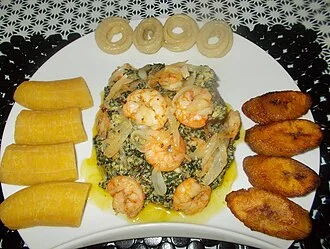
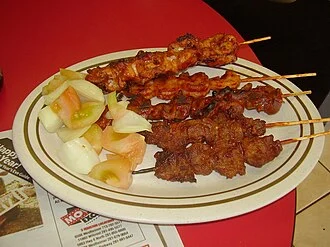
A staple side dish made from fermented cassava wrapped in leaves and steamed. A nutritious dish featuring wild greens slowly cooked with fish or meat. A rich stew made with bitter leaves, groundnuts, and meat. Spicy beef or chicken skewers usually grilled over an open flame.
Traditional Local Food
Douala (Cameroon)
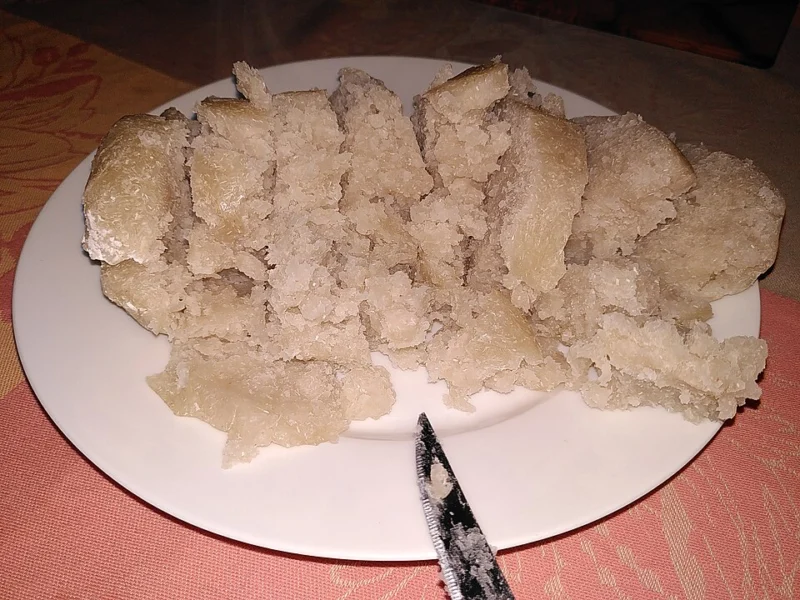 Side dish
Vegan
Bobolo
Bo-bo-loh
· Fermented cassava sticks
🥩
Main course
Meat
Eru
Eh-roo
· Wild spinach and meat stew
Main course
Meat
Ndolé
N-dole
· Bitter leaf stew
Street food
Meat
Soya
Soi-yah
· Spicy skewered meat